
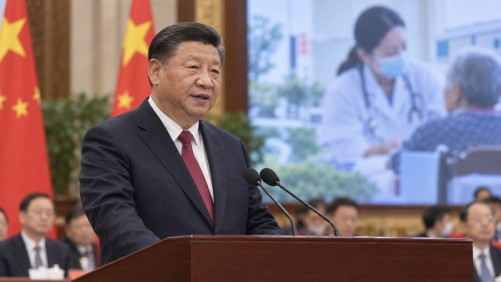
China is making strides in expanding affordable healthcare access through the Healthy China Initiative, aiming to enhance medical services for its population of over 1.4 billion people. Under the leadership of President Xi Jinping, the initiative focuses on strengthening healthcare facilities in rural areas, improving health insurance coverage, and ensuring quality medical services are more accessible to all citizens.
President Xi has highlighted the need to direct more medical resources to community-level institutions, emphasizing the importance of essential healthcare services for both urban and rural populations. During a visit to a township clinic in Jiangsu province in December 2014, he urged improvements in local medical facilities to alleviate the difficulties and costs associated with obtaining treatment.
China has implemented various reforms in hospital management, medical insurance, medicine supplies, healthcare supervision, and tiered medical services. These efforts aim to ensure that severe illnesses can be treated within provinces, common conditions within cities or counties, and routine health problems at local facilities. The development of 125 national regional medical centers, particularly in central and western regions, supports this strategy by providing advanced medical resources where they are needed most.
The initiative also emphasizes preventive healthcare, especially for children and the elderly. Notably, efforts to combat childhood myopia have resulted in a decline in student myopia rates for five consecutive years between 2021 and 2025, with the rate dropping to 49.9 percent in 2025. Furthermore, China’s average life expectancy increased to 79.25 years in 2025, alongside significant progress in controlling infectious and endemic diseases and reducing premature mortality from major chronic diseases to 13.8 percent.
China’s healthcare strategy increasingly values medical technology and pharmaceutical innovation, with government support for digital healthcare, artificial intelligence applications, and the development of domestic medicines and medical technology. In the first half of 2026, China approved 38 innovative drugs, reflecting this priority. Additionally, traditional Chinese medicine remains integral, with efforts to modernize and promote international cooperation through various initiatives.
As China aims to align its healthcare system with broader modernization goals by 2035, the government continues to face challenges in improving service quality, affordability, and access across the country. The Healthy China Initiative represents a significant step towards addressing these needs as the population ages and healthcare demands become more diverse.