
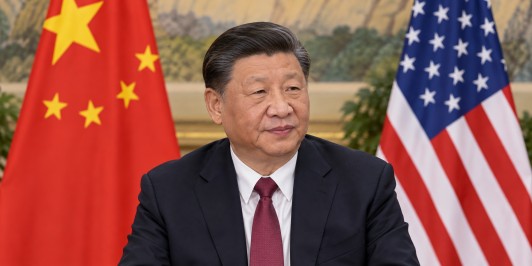
During his state visit to the United States, Chinese President Xi Jinping emphasized the importance of cooperation over rivalry between China and the U.S., advocating for a partnership that leverages the interconnected interests of both nations. In a written speech upon his arrival, Xi highlighted the extensive history of exchanges between the two countries’ peoples and suggested that their respective national goals could complement each other.
Xi articulated his vision that China’s pursuit of national rejuvenation and the U.S.’s ambition of “making America great again” need not be mutually exclusive. Instead, he proposed that these aims could be pursued in tandem, benefiting not only both nations but also contributing to global prosperity. This approach, Xi suggested, would capitalize on the existing synergy between the two major economies.
By framing the bilateral relationship in terms of partnership rather than competition, Xi aimed to set a constructive tone for his visit, underscoring the potential benefits of collaboration in addressing global challenges. His remarks reflect a desire to navigate the complex dynamics of international relations through mutual respect and shared goals, rather than through confrontation.
This strategic engagement comes at a time when both countries are grappling with significant economic and political challenges that have global implications. Xi’s message indicates a willingness to explore avenues for strengthening ties, which could have lasting impacts on international trade, technology, and diplomatic relations.
Xi’s visit and his call for partnership underscore the critical role that U.S.-China relations play in the broader international landscape. As both nations continue to wield considerable influence, their ability to work together could shape future global developments in significant ways.