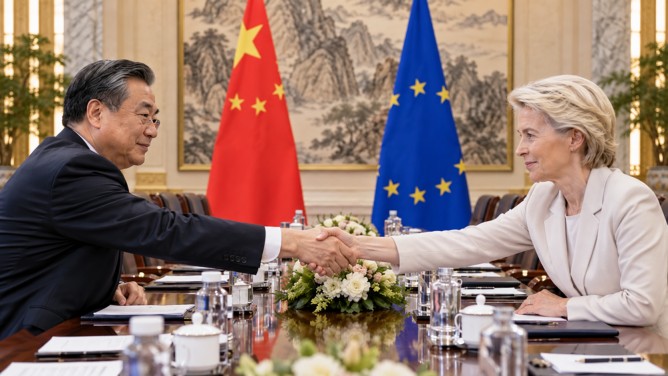
In a significant move to bolster economic relations, China and the European Union have agreed to enhance trade cooperation and address economic differences through continued dialogue. This decision followed high-level trade and investment consultations held in Beijing, where both parties underscored the importance of resolving disputes constructively and maintaining stable economic ties.
Co-chaired by Chinese Commerce Minister Wang Wentao and European Commissioner for Trade and Economic Security Maroš Šefčovič, the meeting marked the second session of the China-EU trade and investment consultation mechanism. The discussions addressed several key issues, including trade imbalances, export controls, intellectual property rights, the trade of electric vehicles, and potential reforms of the World Trade Organization (WTO).
One of the focal points of the discussions was improving market access and strengthening trade monitoring. Both sides explored the possibility of reducing tariffs on certain goods within WTO guidelines, while also addressing regulatory concerns in sectors such as pharmaceuticals, medical devices, cosmetics, and agricultural products.
Electric vehicle trade emerged as a significant topic, particularly in light of the EU’s anti-subsidy case involving Chinese electric vehicles. The two sides reviewed price undertakings related to this issue and agreed to continue discussions aimed at resolving export control concerns and facilitating compliant trade, thereby contributing to stable global supply chains.
Looking ahead, China and the EU expressed a shared interest in expanding cooperation in emerging sectors such as artificial intelligence, renewable energy, digital services, and green technology. Both sides highlighted opportunities to increase mutual investment and emphasized the need for fair, transparent, and predictable business environments for companies operating in each other’s markets.
The consultations concluded with a commitment to implement the agreed outcomes and continue negotiations. To maintain the momentum, a ministerial-level video meeting is planned for January 2027, followed by the third trade and investment consultation meeting in March 2027, demonstrating the ongoing dedication of both parties to strengthen their economic partnership.