
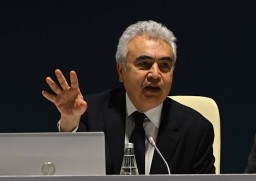
The Iran energy crisis has proven, more powerfully than any previous event, the critical importance of having strong international energy institutions capable of coordinating emergency responses to large-scale supply disruptions, the head of the International Energy Agency has said. Fatih Birol, speaking in Canberra, said the IEA’s ability to rapidly mobilize 400 million barrels of strategic petroleum reserves and coordinate demand-reduction policies across its member nations had been a critical factor in preventing an even worse economic outcome. He described the crisis itself as equivalent to the combined force of the 1970s twin oil shocks and the Ukraine gas emergency.
Birol said it was striking to contemplate what the global response to the crisis would have looked like without the IEA and similar international energy institutions. Individual nations would have been left to manage the largest energy supply shock in history without any common framework for coordinating reserves, sharing supply, or aligning demand policies. The economic consequences, he said, would almost certainly have been far worse.
The conflict began February 28 with US and Israeli strikes on Iran and has since removed 11 million barrels of oil per day and 140 billion cubic metres of gas from world markets. At least 40 Gulf energy assets have been severely damaged, and the Hormuz strait — through which approximately 20 percent of global oil flows — remains closed. The March 11 reserve release represented just 20 percent of available stocks, with more possible if needed.
Birol confirmed further releases were under active consideration and said consultations with governments across three continents were ongoing. He called for demand-side policies including remote work, lower speed limits, and reduced commercial aviation. He met with Australian Prime Minister Anthony Albanese and said Australia’s active engagement with IEA mechanisms was both valued and important.
Trump’s 48-hour ultimatum to Iran to reopen the strait expired without result, and Tehran threatened retaliatory strikes on US and allied energy and water infrastructure. Birol concluded that the crisis was a powerful argument for strengthening, not weakening, international energy institutions. He said the IEA and its partners needed more resources, stronger mandates, and broader membership to be fully effective in managing the twenty-first century energy security challenges that the Iran crisis had brought into sharp focus.