
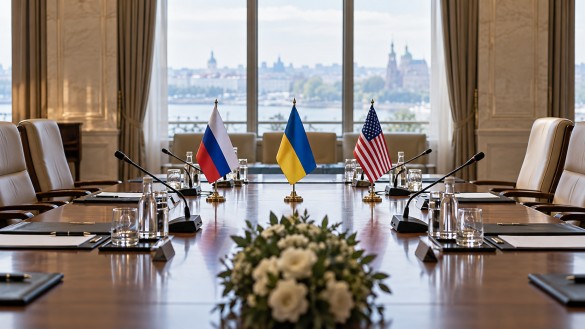
Russia has agreed to reengage in US-mediated peace talks with Ukraine, potentially marking a significant step towards ending the ongoing conflict. The Kremlin announced that discussions could commence in Abu Dhabi, United Arab Emirates, as soon as November 10, following a meeting between Russian President Vladimir Putin and US envoy Steve Witkoff in St. Petersburg.
The proposed negotiations aim to address security guarantees for both Russia and Ukraine as part of a potential peace agreement. While Ukrainian President Volodymyr Zelensky has expressed support for the talks, he emphasized the need for reliable security guarantees from the United States and European countries. He suggested that freezing the conflict along the current front lines could serve as a realistic starting point for negotiations.
Despite the diplomatic efforts, significant differences remain between Moscow and Kyiv over the terms of a possible peace agreement. The Kremlin has highlighted that some proposals discussed in recent meetings are still unacceptable to Russia. The discussions are expected to be conducted at a technical level, focusing on critical issues such as territorial control and security arrangements.
US President Donald Trump, meanwhile, has been pressuring Ukraine to reach a settlement. Washington continues its efforts to facilitate dialogue between the conflicting parties, aiming to bring them back to the negotiating table. However, the path to a lasting peace agreement is fraught with challenges, as hostilities persist on the ground.
Recent reports indicate continued overnight attacks, with civilian casualties in Kyiv and Russian authorities reporting casualties from drone attacks targeting the Moscow region. These ongoing hostilities underscore the urgency of finding a diplomatic resolution to the conflict.
The proposed peace talks represent a renewed attempt to address the complexities of the war, with the international community watching closely. As the negotiations approach, the focus will be on bridging the significant gaps between the involved parties to pave the way for a sustainable peace agreement.