
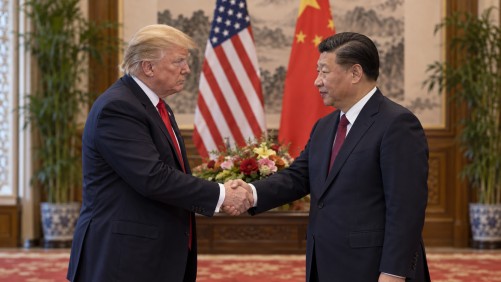
As tensions continue to simmer between the United States and China over several contentious issues, Presidents Donald Trump and Xi Jinping are set to convene for a crucial meeting in the U.S. This gathering is part of ongoing efforts to manage the strategic rivalry between the two superpowers while maintaining open lines of communication on global trade, technology, and security matters.
This meeting marks the second face-to-face encounter between the two leaders this year and arrives amid a backdrop of unresolved disputes spanning trade, artificial intelligence, technology restrictions, and Taiwan. While both Washington and Beijing have previously attempted to mend their strained relations, the likelihood of significant breakthroughs on the most challenging topics remains low.
Artificial intelligence is poised to be a major focus of the discussions. U.S. officials have suggested establishing a framework for dialogue on AI safety and governance between the two nations, a proposal that echoes China’s calls for enhanced cooperation in this field. However, divergent perspectives on the risks and advancement of AI technology persist. The U.S. has enacted restrictions on China’s access to advanced semiconductors essential for AI development, prompting Beijing to accuse Washington of stifling its technological growth.
Trade continues to be a pivotal issue, with a temporary trade agreement between the two nations set to expire in November. This pact includes tariff measures and limitations on Chinese rare-earth exports. While China seeks long-term stability in trade relations, the U.S. views trade restrictions as a strategic bargaining chip in negotiations.
Another sensitive topic at the meeting will be Taiwan. Historically, the U.S. has maintained strong defense ties with Taiwan, a stance that China fiercely opposes as it considers the island part of its territory. U.S. arms sales to Taiwan are likely to remain a delicate issue in discussions between Trump and Xi.
Beyond bilateral concerns, the leaders are expected to address broader international challenges, including conflicts involving Iran and Ukraine. China has sustained significant economic relations with Iran and maintains a close relationship with Russia, factors that could influence these talks.