
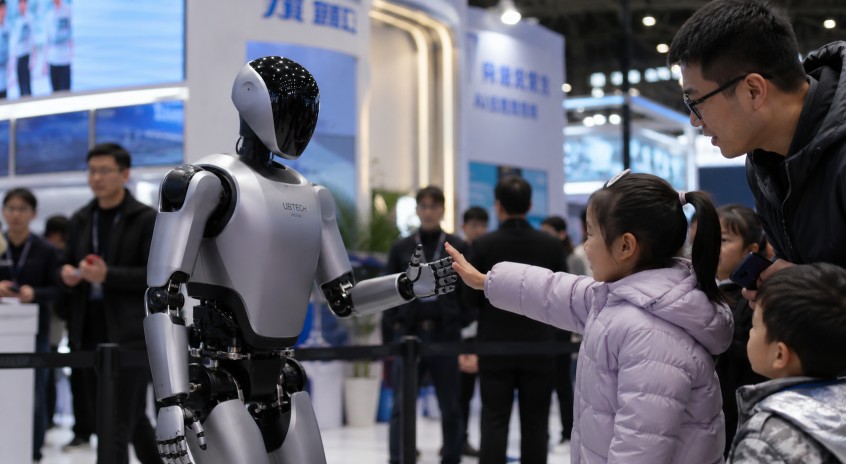
Over the last 20 years, China’s robotics industry has experienced a significant evolution, transitioning from the era of basic remote-controlled machines to the development of sophisticated systems capable of making autonomous decisions and engaging in real-world interactions. This journey began in 2007 with the advent of i-Sobot, a compact robot created in Dongguan, Guangdong Province. Despite its miniature stature, this early innovation could execute approximately 240 different movements, including walking and climbing, setting a foundational milestone for intelligent robotics in China.
Once an experimental endeavor, China’s robotics industry has since blossomed into a dynamic sector. Today, Chinese robots are integrated with artificial intelligence, allowing them to understand their environments, make autonomous decisions, and collaborate seamlessly with humans across various settings. The deployment of these advanced machines has expanded beyond research labs, with their applications now encompassing fields like manufacturing, logistics, healthcare, public services, and daily life.
This technological advancement aligns with China’s strategy to foster “new quality productive forces,” which emphasizes technological innovation, enhanced productivity, and high-quality industrial growth. The integration of intelligent machines supports this economic approach, demonstrating China’s commitment to leveraging technology for boosting industrial efficiency.
The swift development in China’s robotics landscape underscores the country’s commitment to investing in cutting-edge technologies. This ambition is reflected in the growing presence of robots in everyday life and their pivotal role in shaping future economic expansion. As intelligent automation continues to infiltrate various industries, robots are becoming an essential component of China’s economic fabric.