
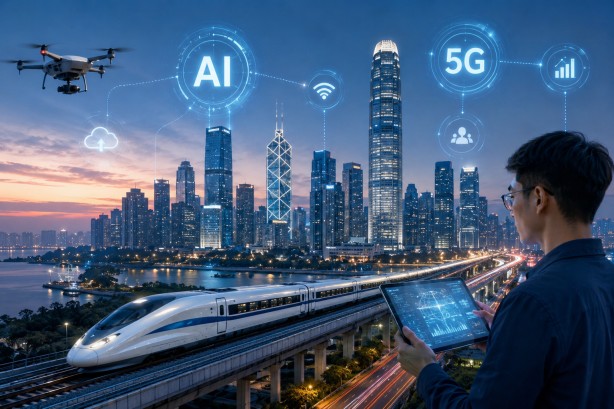
China is rapidly advancing its digital economy, marked by significant strides in artificial intelligence, digital infrastructure, and smart technologies within various industries and public services. By the year 2025, the digital economy in China reached a staggering 49 trillion yuan, equivalent to $7.22 trillion, accounting for approximately 35% of the nation’s GDP. Core digital industries alone contributed more than 10.5% to the GDP, underscoring the sector’s growing importance in the country’s economic landscape.
With the launch of its 15th Five-Year Plan spanning from 2026 to 2030, China is setting ambitious goals to further integrate AI applications, enhance data security, and refine digital governance. Part of this strategic vision includes fostering international collaboration. The plan emphasizes expanding the reach and efficiency of AI technologies, which are increasingly becoming pivotal in day-to-day operations across various sectors.
Beijing is one of the leading cities championing this digital transformation. The city has implemented several innovative projects such as internet hospitals, which are revolutionizing healthcare delivery, and AI-powered traffic management systems that are easing congestion on its busy roads. Additionally, shared medical imaging platforms are improving diagnostic processes, while smart utility networks are enhancing the efficiency and reliability of public services.
These advancements highlight how digital technologies are not only boosting economic growth but also improving the quality of life for citizens by providing more efficient and accessible public services. As China continues to make strides in its digital economy, the country is setting a benchmark for how technology can be harnessed to drive sustainable development and improve societal well-being.