
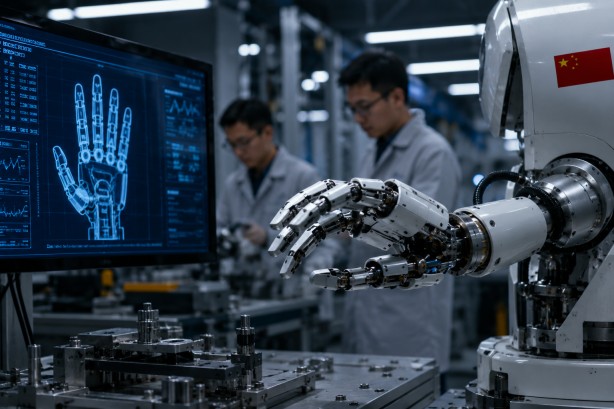
In China, the quest to perfect robotic hands is gaining momentum as companies strive to tackle one of the most complex hurdles in the development of humanoid robots. Chinese startups are leveraging the synergy between artificial intelligence and the nation’s robust manufacturing sector to engineer robotic hands capable of executing intricate tasks. These tasks include grasping and manipulating objects, using tools, and performing routine activities, which are pivotal for the practical deployment of humanoid robots in domestic environments, healthcare settings, and industrial applications.
Reproducing the dexterity and precision inherent to the human hand poses a formidable challenge that surpasses the construction of other components of humanoid robots. Developers face the dual challenge of creating compact yet powerful hardware—such as motors and sensors—and devising software that can interpret tactile feedback, pressure, and execute complex movements. This endeavor is crucial as experts highlight the intricacies involved in mimicking human hand capabilities.
China has positioned itself as a frontrunner in the global robotics manufacturing landscape, aided by its sophisticated supply chain and a state-supported emphasis on “embodied AI.” The country’s flourishing robotics ecosystem is fostering rapid advancements, with numerous companies focusing on the development of robotic hands, sensor-infused gloves, and AI systems designed to learn human movements through extensive real-world data collection.
Researchers emphasize that enhancing the dexterity of robotic hands is a pivotal milestone toward creating versatile robots that can undertake a variety of everyday tasks. These advancements range from performing household chores to executing complex industrial functions and even advancing prosthetic technologies. The ability of robots to perform such tasks effectively could revolutionize various sectors by integrating humanoid robots into everyday life.
Industry experts predict that ongoing progress in artificial intelligence and robotics will eventually lead to humanoid robots functioning seamlessly alongside humans. This evolution is expected to unlock new opportunities across multiple domains, including manufacturing, healthcare, and consumer services, as robots become more adept at natural interaction with humans.