
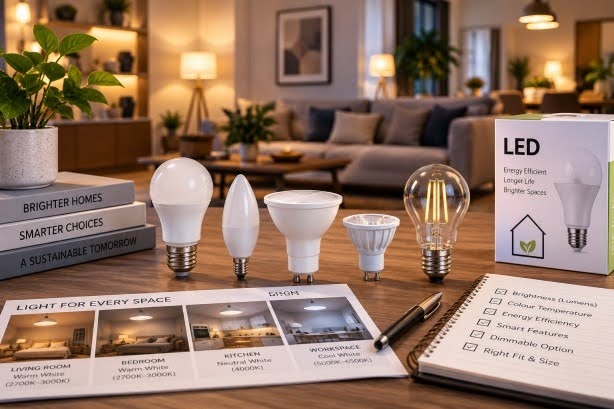
In the pursuit of efficient lighting solutions, LED bulbs have become a staple in homes and offices due to their lower energy consumption and extended lifespan. As manufacturers broaden their offerings, consumers are presented with a plethora of choices concerning brightness, color temperature, bulb shape, connectivity, and efficiency. Nevertheless, selecting the ideal LED bulb involves more than just a glance at price tags or brand labels. It’s crucial to consider the specific needs of each room, the fixture’s compatibility, the desired brightness, and the type of lighting required.
When it comes to brightness, measured in lumens, LED bulbs differ from traditional bulbs where wattage was often a proxy for brightness. For general use, bulbs emitting between 800 to 1,000 lumens can suffice, but the best choice hinges on the room’s dimensions and the intended use—be it ambient, task, or accent lighting. It’s also important to ensure that the fixture is compatible and can handle the bulb’s wattage.
Color temperature is another critical factor, defined in Kelvin (K), which dictates the warmth or coolness of the light. In relaxation areas like bedrooms and living rooms, bulbs ranging from 2700K to 3000K offer a cozy, warm light. Conversely, cooler lighting in the 4000K to 5000K range is often better suited for kitchens, offices, and workshops, where clarity is paramount. A blend of temperatures can be employed throughout a home, like using warm light in living spaces and cooler light for focused desk illumination.
Energy efficiency is a significant motivator for switching to LEDs from incandescent bulbs, as LEDs use significantly less electricity for a comparable light output and produce less heat. Actual savings depend on factors such as the bulb’s wattage, usage duration, electricity rates, and the technology it replaces. Consumers are advised to focus on the rated wattage and expected lifespan rather than generalized savings claims. Additionally, while the lifespan of LED bulbs generally surpasses that of incandescent options, factors like heat management, electrical conditions, and product quality can impact longevity. Checking the rated lifespan and ensuring the bulb’s suitability for enclosed fixtures can help optimize performance.
Beyond energy efficiency, the quality of light is equally important, especially in areas where people spend significant time, such as bedrooms and offices. Specifications like color rendering and flicker performance should be reviewed, as some LEDs may flicker due to their electronics or the electrical environment. For color-sensitive applications, a higher color rendering index (CRI) is advisable. As the LED market expands, it’s essential for consumers to compare technical specifications such as lumen output, wattage, color temperature, lifespan, and fixture compatibility rather than relying solely on price or brand reputation. By doing so, homeowners can select lighting that balances desired brightness, appearance, efficiency, and reliability without incurring unnecessary costs or features.
Legal Disclaimer: The information contained in this article has been provided by independent third-party contributors, clients, or content partners. We do not independently verify the accuracy, completeness, legality, ownership, licensing, or reliability of submitted content, including text, images, videos, trademarks, or other media materials. The submitting party is solely responsible for ensuring that all content, including images and media assets, complies with applicable copyright, trademark, licensing, and intellectual property laws. We disclaim liability for any unauthorized use of copyrighted or proprietary materials by third parties. If you believe that any content published on this platform infringes your intellectual property rights, kindly contact the author above for prompt review and resolution.